






Свяжитесь с нами
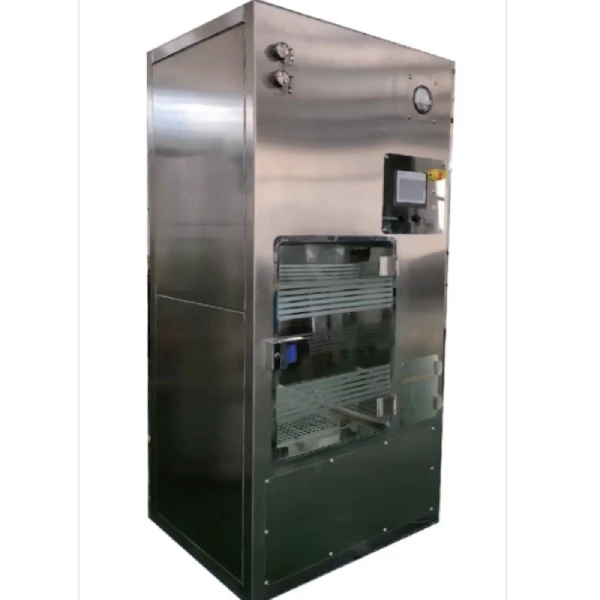
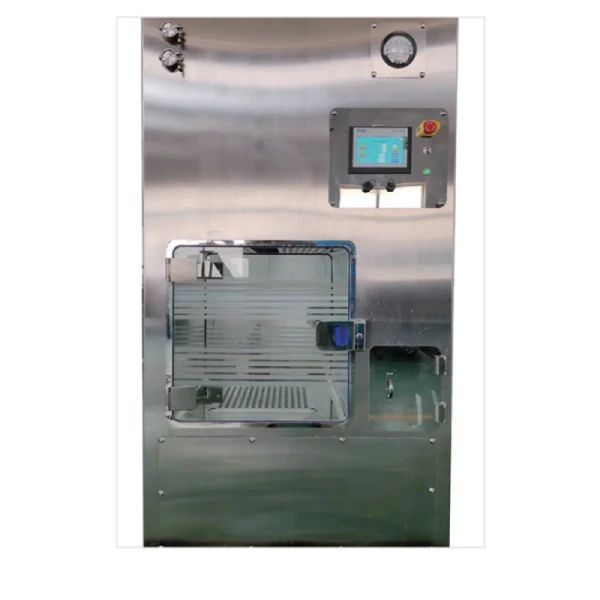
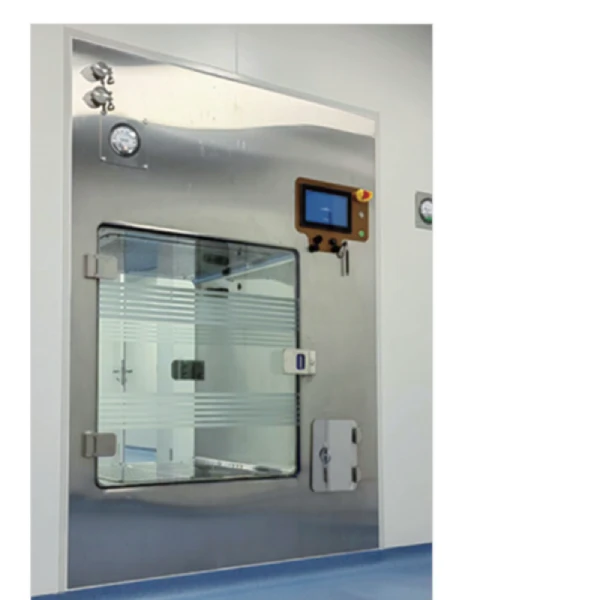
Коробка VHP Pass
Обзор:
Коробка прохода VHP (стерильная коробка прохода парового переоксида водорода) - это герметичное устройство передачи, предназначенное для биологической дезагрязнения поверхностей материала. Используя испаренный перекись водорода (VHP) в качестве стерилизирующего агента, он работает при низкой температуре и атмосферном давлении для достижения высокоэффективной стерилизации поверхности. Он идеально подходит для передачи предметов из чистых зон низкого качества в чистые зоны высокого качества. Это оборудование решает неадекватную эффективность стерилизации традиционных ультрафиолетовых коробок, достигая скорости убийства Log6 (стерилизация 99,9999%). Это критическое асептическое решение для передачи, которое полностью соответствует требованиям GMP.
Ключевые слова:
ДЕТАЙЛЬ:
1. Product Overview
The VHP Pass Box (Vaporized Hydrogen Peroxide Sterile Pass Box) is a sealed transfer device designed for biological decontamination of material surfaces. Using Vaporized Hydrogen Peroxide (VHP) as the sterilizing agent, it operates at low temperature and atmospheric pressure to achieve high-efficiency surface sterilization. It is ideal for transferring items from low-grade clean areas to high-grade clean areas.
This equipment addresses the inadequate sterilization effectiveness of traditional UV pass boxes, achieving Log6 kill rate (99.9999% sterilization). It is a critical aseptic transfer solution that fully complies with GMP requirements.
2. Working Principle
The core working principle of the VHP Pass Box is based on Flash Evaporation technology, which rapidly converts liquid hydrogen peroxide into hydrogen peroxide vapor for thorough surface sterilization.
The working cycle consists of five stages:
Stage 1: Chamber Leak Detection. Pressurize the chamber to check airtightness; ensure leakage rate ≤0.5%VOL/h at 100Pa before sterilization.
Stage 2: Preheating and Dehumidification. Supply clean, dry air into the chamber to maintain low humidity, optimizing VHP sterilization efficacy.
Stage 3: Sterilization Cycle. Inject hydrogen peroxide vapor, maintain target concentration for 30-60 minutes; verify with chemical and biological indicators.
Stage 4: Residue Removal. Stop VHP input, activate residue removal system; catalytically decompose and ventilate until H₂O₂ residual ≤1ppm.
Stage 5: Class A Laminar Flow. Maintain laminar airflow to ensure aseptic environment during material transfer.
Sterilization Validation: Using Bacillus stearothermophilus ATCC 7953 as biological indicator, achieving 10⁻⁶ Sterility Assurance Level (SAL).
3. Product Structure and Components
The VHP Pass Box consists of the following core components:
Chamber: Interior made of 316L stainless steel, exterior of 304 stainless steel. Corrosion-resistant and easy to clean, with mirror-polished interior and rounded corners for no dead space.
VHP Generator: Integrated flash evaporation system that vaporizes hydrogen peroxide solution at low temperature to produce high-efficiency sterilizing gas.
Circulation Fan: Low-noise centrifugal fan that drives gas circulation for uniform VHP distribution.
HEPA Filtration System: Supply HEPA H14 and exhaust HEPA H14 filters, ensuring all air entering and exiting the chamber is filtered to prevent secondary contamination.
Sealing System: Inflatable high-density gasket that expands during operation to ensure absolute chamber sealing.
Interlock System: Electromagnetic interlock that prevents simultaneous door opening and avoids cross-contamination.
Control System: PLC with HMI touchscreen (Siemens or equivalent), featuring three-level access control, electronic signature, audit trail functionality, and SCADA data acquisition support.
Sensor System: Includes temperature and humidity sensors, differential pressure sensors, and hydrogen peroxide concentration sensors for real-time online monitoring to ensure precise process control.
4. Features and Advantages
First, High Sterilization Efficiency. Flash evaporation technology ensures efficient hydrogen peroxide conversion. Log6 kill rate validated by biological indicators. Fast cycle time of 1-2 hours for complete aseptic transfer.
Second, High Safety. Inflatable sealing ensures absolute containment during sterilization cycles. Independent ventilation unit prevents contamination of facility HVAC system. Residual H₂O₂ ≤1ppm after cycle completion, safe for operators and environment.
Third, No Dead Corner Design. Integrated mirror-polished interior with large-radius rounded corners. Horizontal laminar flow ensures uniform H₂O₂ gas distribution. Optional mobile perforated shelves enable thorough sterilization from all sides.
Fourth, High Automation. Siemens PLC control with color touchscreen operation. Three-level access control, electronic signature, and audit trail functionality. Compliant with 21 CFR Part 11 and GMP computerized system validation requirements. Sterilization parameters can be printed and recorded for archive management.
Fifth, Easy Installation and Maintenance. Main components and pipelines arranged on single side, requiring only one-side maintenance space. Removable HEPA filter design for easy replacement.
5. Technical Specifications (Standard)
Chamber Material: Interior 316L stainless steel, exterior 304 stainless steel.
Surface Finish: Mirror polished, Ra less than 0.6μm, rounded corners.
HEPA Filter Grade: Supply HEPA H14, exhaust HEPA H14.
Sterilant: 30-35% food-grade hydrogen peroxide solution.
Sterilization Efficacy: Log6 kill rate (Bacillus stearothermophilus ATCC 7953).
Cycle Time: Less than 120 minutes.
Residual Concentration: Less than or equal to 1ppm.
Chamber Cleanliness: Complies with EU GMP Class B / ISO Class 5.
Air Changes: Greater than or equal to 80 per hour.
Leakage Rate: Less than or equal to 0.5%VOL/h at 100Pa.
Tightness Standard: Complies with ISO 10648-2.
Control System: Siemens PLC with HMI touchscreen.
Power Supply: AC220V/50Hz or AC380V/50Hz.
Noise Level: Less than or equal to 70dB(A).
Standard Chamber Sizes (Interior Width × Depth × Height):
Model VHPB-125: 500×500×500 mm, suitable for laboratory small batch transfer.
Model VHPB-200: 600×600×600 mm, suitable for general pharmaceutical and laboratory use.
Model VHPB-350: 700×700×700 mm, suitable for medium batch transfer.
Model VHPB-500: 800×800×800 mm, suitable for production material transfer.
Model VHPB-800: 900×900×1000 mm, suitable for large batch or large item transfer.
Model VHPB-1200: 1200×1000×1000 mm, suitable for pallet or bulk material transfer.
6. Product Classification
Standard VHP Pass Box: Integrated VHP generator with complete sterilization, ventilation, and laminar flow functions. Suitable for pharmaceutical manufacturing and aseptic laboratories.
VHP Sterilization Chamber: Large volume, capable of pallet sterilization. Suitable for biopharmaceutical bulk drug substance and vaccine production.
Isolator VHP Pass Box: Integrated with isolator system, double-door sealed design. Suitable for aseptic filling lines and cell therapy product manufacturing.
Biosafety VHP Pass Box: Biosafety-level sealing, suitable for BSL-3 laboratories and other high-containment biosafety facilities.
7. Application Areas
VHP Pass Boxes are widely used in industries and scenarios with stringent sterility requirements.
Pharmaceutical Industry: Aseptic transfer of raw material and excipient outer packaging into Grade B or A areas. Transfer of production tools and molds. Transfer of culture media, buffers, and sterile materials. Compliant with GMP Annex 1 requirements for sterile products.
Biopharmaceutical and Vaccine Production: Aseptic transfer of cell cultures and viral vectors. Material transfer in vaccine manufacturing processes. GMP production of gene therapy products.
Biosafety Laboratories: Material transfer in BSL-2 and BSL-3 laboratories. Sealed transfer of pathogenic microorganism samples. Safe removal of experimental waste.
Medical Facilities: Sterile transfer of surgical instruments and implants. Material transfer in sterile compounding pharmacies.
Laboratory Animal Facilities: Sterile transfer of animal cages and bedding. Material sterilization transfer in SPF animal rooms.
Transferable items include: Material drums and open containers. Operating tools and laboratory instruments. Environmental monitoring equipment (petri dishes, air samplers). Sealed packaged items.
8. Comparison with Traditional UV Pass Box
Sterilization Principle: Traditional UV pass box uses UV irradiation; VHP pass box uses vaporized hydrogen peroxide gas.
Coverage: Traditional UV pass box provides surface-only coverage with shadow areas; VHP pass box provides gas distribution with complete coverage.
Kill Rate: Traditional UV pass box achieves low to medium level (Log3-4); VHP pass box achieves high level (Log6).
Suitable Items: Traditional UV pass box is suitable only for flat, smooth surfaces; VHP pass box is suitable for all shapes, including complex geometries.
Validation: Traditional UV pass box is difficult to quantify; VHP pass box allows quantitative validation with biological indicators.
GMP Compliance: Traditional UV pass box has limited compliance; VHP pass box is fully compliant with current GMP requirements.
9. Selection Guide
Item Size: Select chamber size based on maximum item dimensions.
Sterility Requirement: Confirm whether Log6 sterilization capability is required.
Installation Environment: Verify wall opening dimensions and installation method; reserve maintenance space.
Control System: GMP environment requires audit trail and electronic signature functionality.
Validation Support: Select supplier that provides IQ, OQ, and PQ validation documentation.
Standards Compliance: Ensure compliance with GMP, ISO 14644, ISO 10648-2 and other applicable standards.
10. Installation and Maintenance
Installation Key Points: Cut appropriate opening in the wall. Ensure level installation with proper sealing. Reserve single-side maintenance space (minimum 600mm). Connect power supply, compressed air, and exhaust ducting.
Daily Maintenance: Clean interior and exterior surfaces daily. Regularly inspect sealing gasket integrity. Periodically calibrate sensors (temperature, humidity, hydrogen peroxide concentration). Conduct regular HEPA filter integrity testing (PAO leak test). Replace HEPA filters as required. Validate sterilization cycle efficacy with biological indicator challenge tests.
Часто задаваемые вопросы
- 1 Как электронные блокировки улучшают работу?
- 2 Какой метод установки лучше всего для стерильных приложений?
- 3 Какое обслуживание уплотнения уплотнения требуется?
- 4 Какова правильная процедура дезинфекции материалов?
- 5 Требуется ли отбор проб поверхности для проходящих камер?
- 6 Как следует классифицировать проходящие камеры по чистоте?
- 7 Как работает система блокировки дверей?
- 8 Какова главная цель проходящей камеры?
1
Как электронные блокировки улучшают работу?
Электронные блокировки обеспечивают аудио/визуальные предупреждения, когда двери остаются открытыми, предотвращают случайное повреждение от принудительного открытия, позволяют интегрировать BMS и поддерживают контроль доступа с учетом данных пользователя.
2
Какой метод установки лучше всего для стерильных приложений?
Используйте полностью сваренную конструкцию из нержавеющей стали с непрерывными сварными швами и гладкими углами радиуса. Это устраняет трудно очищаемые трещины и трещины, где могут накапливаться загрязнители.
3
Какое обслуживание уплотнения уплотнения требуется?
Проверьте EPDM или силиконовые уплотнения на 250% сжатия при закрытии двери. Заменить, если затвердили, трещины или потеря эластичности. Чистить с 70% алкоголя; избегать хлора или сильных кислотных очистителей, которые вызывают коррозию.
4
Какова правильная процедура дезинфекции материалов?
Следуйте принципу "сначала очистить, затем дезинфицировать" - снять наружную упаковку, протереть 70% изопропиловым спиртом или 0,5% перуксусной кислотой, поместить с интервалом между предметами и подвергать воздействию УФ в течение минимум 15 минут (рекомендуется 30 минут).
5
Требуется ли отбор проб поверхности для проходящих камер?
Да. USP 797 требует отбора проб поверхности всех классифицированных районов, включая проходящие камеры. CSP категории 1/2 требуют ежемесячной выборки; Категория 3 требует еженедельного отбора проб и отбора проб в конце партии.
6
Как следует классифицировать проходящие камеры по чистоте?
Написать классификацию ISO более чистого подключенного пространства. Например, если проход соединяет ISO 8 с ISO 7, классифицируйте его как ISO 7. Наилучшая практика отрасли соответствует более высокому стандарту двух связанных областей.
7
Как работает система блокировки дверей?
Механическая или электронная блокировка позволяет открыть только одну дверь за раз. Когда одна дверь открывается, противоположная дверь автоматически закрывается, создавая воздушный замок, который предотвращает перекрестное загрязнение и поддерживает дифференциалы давления в помещении.
8
Какова главная цель проходящей камеры?
Проходящая камера - это корпус, установленный в стене чистой комнаты, чтобы облегчить передачу материалов между областями, одновременно минимизируя риск загрязнения. Он уменьшает движение пешеходов, поддерживает дифференциальное давление и предотвращает обмен нефильтрованным воздухом через запертые двери.